Physical Address
304 North Cardinal St.
Dorchester Center, MA 02124
Physical Address
304 North Cardinal St.
Dorchester Center, MA 02124

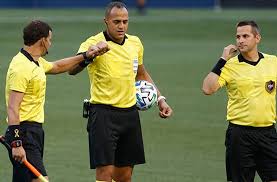
In professional football matches, the game is controlled by four officials: the referee, two assistant referees, and the fourth official. The referee has full authority and, aided by other officials, is tasked with enforcing the 17 Laws of the Game.
During the early days of association football, these “men and women in black” were absent. Instead, teams relied on a spirit of fair play and good sportsmanship. As disputes began to escalate during the 1860s and ‘70s, however, umpires were introduced. But it wasn’t until 1881 than an objective and authoritative official, known as referee, first appeared.

As the referee’s standing grew during the 20th century, influential figures began to emerge. English referee Stanley Rous, for example, was one of the leading referees of the 1930s. In addition to instigating the diagonal system of control, he drafted the 1938 rewrite of the rules, which remain substantially unchanged today. He also championed the provision of referee training by FIFA for all its new members.
The football match is controlled by the referee, who has full authority to enforce the rules for the match to which he has been appointed. His main duties are:
Football referee must enforce the rules
The referee’s principal responsibility is to enforce the rules to his appointed match as set out in the Laws of the Game. He has the full power to sanction players for misbehaving badly during a match.
Football referee must control the match
The referee must control the match in cooperation with the assistant referees and, for official matches, the fourth official. Controlling the match means keeping the game under the Laws of the Game all the time and at all cost.
Football referee must check equipment
He must ensure that the ball and the players’ equipment meet the requirements of the Laws of the Game. This includes checking on players’ shirts, shorts, boots and protective gear. A player who is not wearing the correct football kit will be asked to leave the pitch by the referee and may only return when the referee has confirmed that his kit is correct.
Football referee must timekeep and maintain records
The referee must act as the timekeeper for the match, and keep a record of any substitutions and offenses.
Football referee will stop play when necessary
The referee must stop, suspend, or abandon the match for any infringements of the Laws of the Game, or because of any other outside interference.
Football referee must ensure player safety
The referee must stop the match if a player is seriously injured, ensuring that he is removed from the field of play.